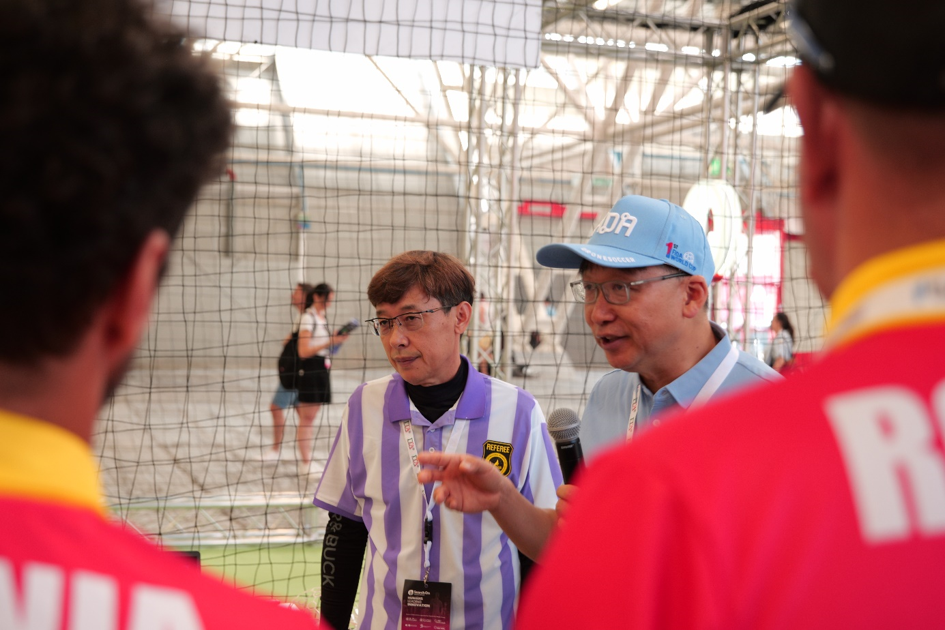
We asked 10 questions to Wan Geun Jang, the FIDA Arbitration Committee representant
Often hidden by the sportive side of the discipline, refereeing remains a little-known yet indispensable aspect of ensuring the smooth running of Drone Soccer competitions. Even as it supports the development and professionalization of the sport on an international scale, improving refereeing remains one of FIDA’s key priorities for growth. Wan Geun Jang, referee liaison for the International Drone Soccer Federation (FIDA), discusses—through ten questions—the specifics of this role, the qualities expected of a referee, and the challenges of a rapidly expanding sport.
1. In your opinion, why is it essential to have referees in a sport as new as Drone Soccer?
Drone Soccer is still a young and rapidly evolving sport. In any emerging discipline, fair competition and consistent rule enforcement are fundamental to its development. Referees play a crucial role not only in enforcing the rules but also in ensuring player safety and maintaining the integrity of the game. Their presence allows both participants and spectators to trust the fairness and legitimacy of the competition.
2. How do you ensure your decisions are respected when a team disagrees with a call?
Respect begins with consistency and transparency. Whenever a team disagrees with a decision, I remain calm and explain the relevant rule and the reasoning behind the call. While not every decision will be popular, players and coaches are more likely to respect a referee who applies the rules fairly, consistently, and without bias.
3. Does the fact that Drone Soccer is still a relatively unknown sport change the way you referee?
Yes, to some extent. Because Drone Soccer is still developing internationally, many players, coaches, and spectators are learning the finer details of the rules. As referees, we often serve not only as officials but also as educators who help participants better understand the sport. In some situations, providing a clear explanation can be just as important as making the correct call.
4. What are the biggest challenges a Drone Soccer referee faces today?
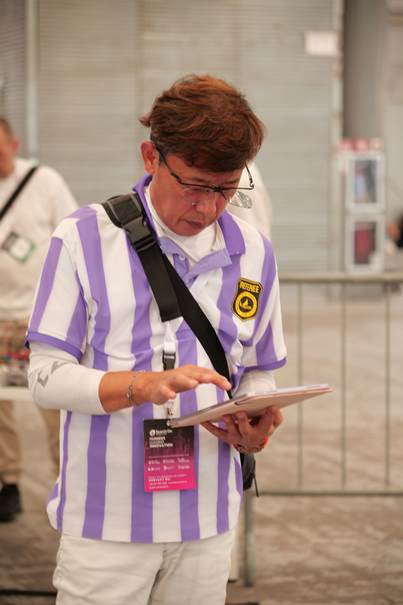
Drone Soccer is a highly dynamic sport where multiple drones are moving simultaneously in a confined space. Referees must make accurate decisions within seconds, often involving collisions, fouls, or scoring situations that occur very quickly. In addition, as drone technology and competition formats continue to evolve, referees must constantly update their knowledge and adapt to new situations.
5. Do you think the role of the referee will evolve as Drone Soccer develops? Why?
Absolutely. As the sport grows and competition becomes more advanced, expectations for accurate officiating will increase. In the future, technologies such as video review systems and other digital tools may become an integral part of the sport. Referees will likely take on expanded responsibilities, combining traditional officiating skills with the ability to manage and utilize advanced technologies effectively.
6. How do you strike a balance between strictly enforcing the rules and ensuring the smooth flow of the game?
Both aspects are important. Rules must be enforced to protect fairness and safety, but maintaining the rhythm of the game is also essential. I apply the rules strictly when player safety or the outcome of the match is directly affected. In less critical situations, I use sound judgment while ensuring that the same standards are applied equally to all teams.
7. What personal qualities are most important for gaining the trust of players and coaches?
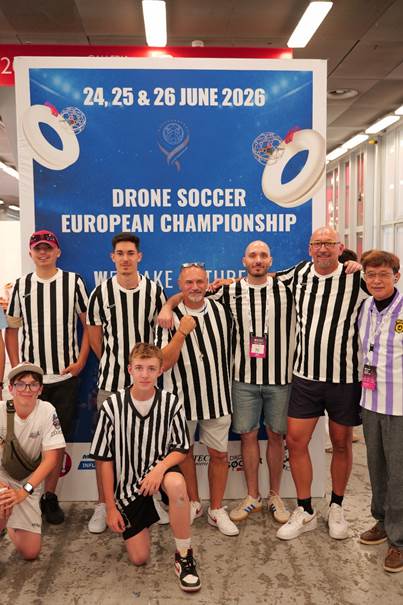
Fairness and consistency are the foundations of trust. Players and coaches need to know that the same standards apply to everyone, regardless of the team or situation. Professional knowledge, confidence under pressure, and the ability to communicate clearly are also essential qualities for any referee.
8. Have you ever had to make an unpopular decision? How did the players and the audience react?
Every referee eventually faces difficult or controversial decisions. Naturally, there are moments when players or spectators are disappointed by a call. However, when decisions are clearly based on the rules and applied fairly to both sides, most people ultimately understand and accept them. A referee’s responsibility is not to make popular decisions, but to make correct and impartial ones.
9. In your opinion, what improvements could be made to Drone Soccer officiating in the coming years?
I believe international standardization of rules and referee training programs will be key to the sport’s future growth. Expanding educational opportunities for referees and increasing international cooperation would help create greater consistency in officiating worldwide. These improvements would strengthen the credibility and professionalism of Drone Soccer competitions.
10. What message would you like to convey to the players about the importance of respecting referees and their decisions?
Referees and players share the same goal: to create a fair, competitive, and enjoyable sporting environment. Respect for referees is not simply about accepting decisions; it is about respecting the principles of sportsmanship and fair play. Open communication and mutual respect between players, coaches, and officials will help Drone Soccer continue to grow and earn recognition around the world.