Romania: The New Kid on the Block Who Isn’t Afraid of the Big Boys
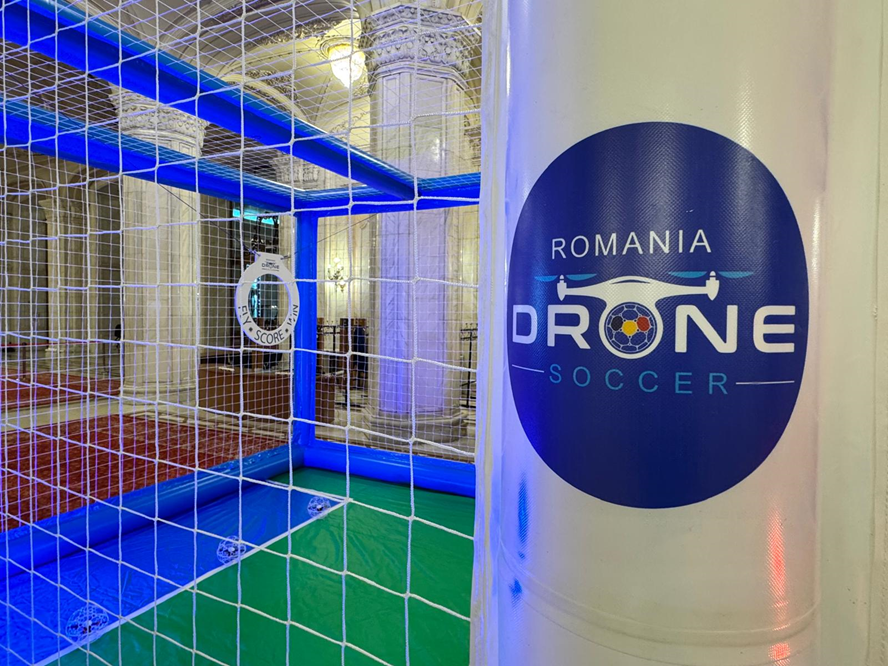
Romania Drone Soccer, the newest member of the FIDA European Union © Romania Drone Soccer
A newcomer to the European scene, the Romania Drone Soccer association is waiting for just one thing before diving fully into Drone Soccer: the official granting of its FIDA license. Launched in May by Mihai Costea and Mihai Santa, the Romanian association will even be competing in the European Championship in a few days. But before that, they must be careful not to rush things…
It all began with a simple idea. As an operator at the event company Adventure Studio, Mihai Costea was looking for new activities to add to his “team building” program for clients. Eager to explore FPV drones, it was no coincidence that the Romanian discovered Drone Soccer. After a bit of research, the first Droneball was purchased, and “Mihai” contacted Pascal Roignau, the FIDA representative for Europe.
The First Meeting
In April 2026, Pascal Roignau arrived in Brașov with all the equipment needed to launch the project in the country. But beyond a simple delivery, it was above all a rich exchange of knowledge that set the two Mihai on the right path: “Pascal’s arrival was very enriching. Beyond his knowledge of the sport, he’s someone who, just like us, launched his business through the events sector in France. He explained to us how to grow through all aspects of Drone Soccer—competition, relationships with the national education system, and even corporate services,” says the younger of the two.
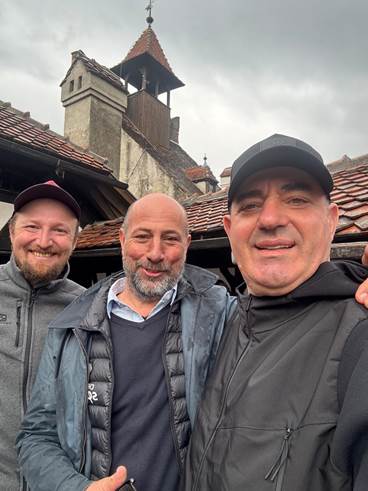
Mihai Santa (left) and Mihai Costea (right) flanking Pascal Roignau in Brasov last April © Romania Drone Soccer
But this event was also the perfect opportunity to make their debut on the international competitive stage. In fact, Drone Soccer France is organizing the very first European Drone Soccer Championship next June. It is the perfect chance to gain international recognition and join FIDA: “When he told us about participating in this championship, we could hardly believe it. That’s when you realize that anything is possible in Drone Soccer. It’s the perfect opportunity to have our first competitive experience right after just getting started. We understand we’ll be the oldest team in the competition; I hope we don’t get humiliated by the middle schoolers,” Mihai Costea quips.
Building a Connection with Education
Closely linked to education and STEM, Drone Soccer stands out for its accessibility to young people. While the Drone Soccer Romania association has so far focused its launch on collaboration with Adventure Studio’s partners, it was thanks to Pascal Roignau’s advice that it quickly established contact with the Ministry of Education. “At the end of May, we had the privilege of organizing our first event with children at a prestigious venue, the Palace of the Parliament in Romania. It’s a huge opportunity to be invited to such a place by the government; everything is happening so fast for us—it’s impressive. This first experience with the children made us realize just how important this aspect of the sport is. Seeing the parents and teachers of these children intrigued and curious to understand why this game is so much fun is quite rewarding,” the Romanians say with satisfaction.
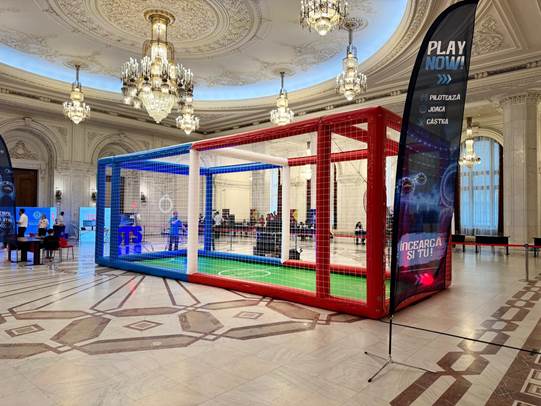
The Drone Soccer Romania booth amid the prestigious decorations of the “Romanian Parliament Palace” © Romania Drone Soccer
Big Ambitions in the Sport
While relations between FIDA and FAI are not exactly cordial in some countries, Romania Drone Soccer plans to break with convention and work with both organizations: “For the launch, we’ve chosen to align ourselves with FIDA, which may have less complex rules for its drone ball competitions, making it more accessible to beginners. But in the future, the idea would also be to join FAI to diversify our activities and grow as much as possible.”
While Romania is not necessarily known for its sporting history, Drone Soccer is an exception to the rule for good reason: it is a tech sport, and that brings another dimension to the discipline: “Here in Romania, we’re particularly comfortable with technology, mechanics, and engineering. It’s part of our culture.”
While Romania will be the “underdog” at the European Championship in Bologna, Mihai Costea and Mihai Santa’s team remains full of ambition: “As I said, we may be the oldest team, but we also have mechanical skills. We’re training as hard as we can to improve our performance and ensure we’re up to par, and to build real momentum for the association across the country. Ideally, this championship would serve as the foundation for our national competitive scene. Within five years, we’d like to launch regional and national championships in Romania, whether through companies or schools. This would be an opportunity to identify the country’s top talent, both in piloting and mechanics, and to build a multigenerational team to represent us in upcoming international competitions,” the two colleagues say in agreement.