European Drone Soccer Championship : The European Cup, summit of the Occidental Drone Soccer
This is the final showdown of the very first European Drone Soccer Championship—the tournament that will crown the first European Drone Soccer champion: the European Cup. It’s a sort of “Four Nations Tournament” that might even bring back some memories for rugby fans. But who will claim the crown? Will it be the young Romanian team, host nation France, the Hungarian underdogs, or the heavy favorite Slovakia—which has already won both preliminary tournaments? The podium remains up for grabs.
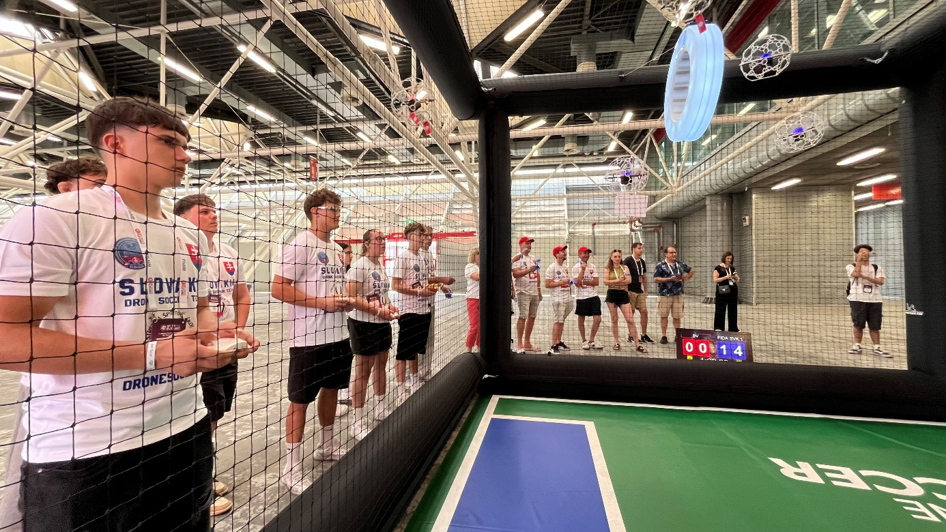
Like the two preliminary Challenge tournaments, this European Cup is divided into two phases. The first is a “round-robin” stage where each team faces every other team once, followed by a final phase based on the standings from the first stage. But unlike the Challenge tournaments, the matches in the ranking phase are played to the best of two sets instead of one. After these six matches, Slovakia is leading the group with three wins in three matches. Behind them, France takes second place after upsetting Hungary in three sets in a high-level match: 19-17, 16-18, 18-16. With two losses and one win, Hungary finishes third ahead of the unfortunate Romania, which is in fourth place without a single win and continues to learn the harsh realities of Drone Soccer.
The Final 4
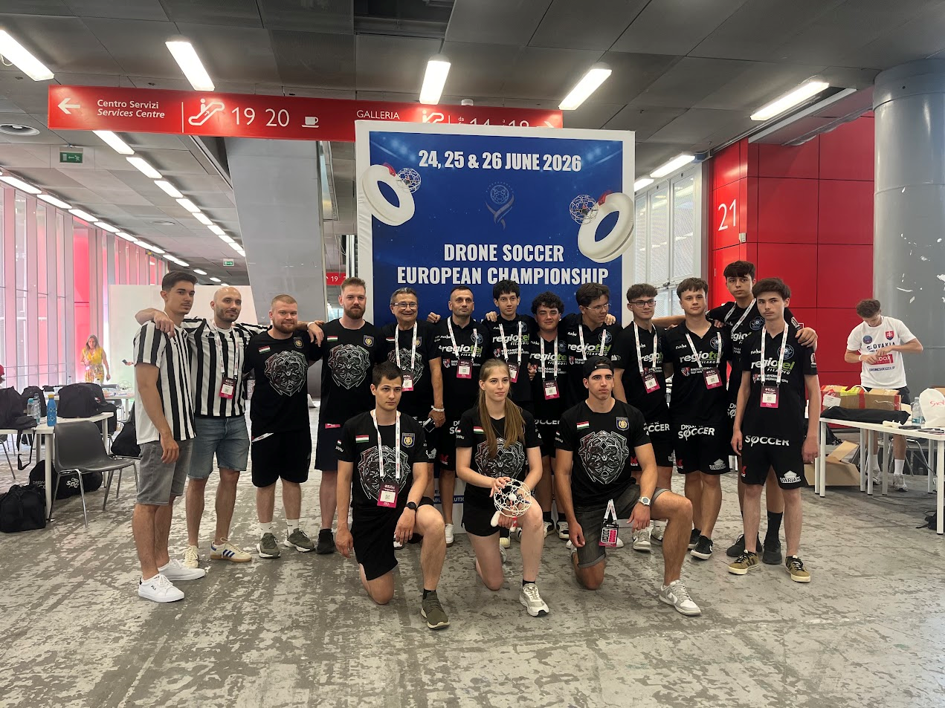
The semifinals are just around the corner, and the matchups have been set for these final matches of the championship. Slovakia, which finished first in the initial phase, faces fourth-place Romania, while Hungary is looking for revenge against France. In the first semifinal, the Slovakian team easily defeated a valiant Romanian squad in two sets and advanced to the final. Despite the loss, Romania’s striker, Cézar Crican, who was experiencing his first international competition alongside his team, remained encouraged: “It’s hard to see the gap in skill level between us and Slovakia, but reality has caught up with us; we’re still very new to this scene. But regardless of the result, we’ve learned so much from this week of competition; it was a wonderful opportunity for such a young team to participate in an event like this. ” On the other hand, Hungary got its revenge against France—and how! Winning in two sets, 22-19, 22-13, the Hungarians showed great strength of character and determination to bounce back from their disappointment in the first round, thereby giving themselves one last chance to go for the gold this week.
The Final Showdowns
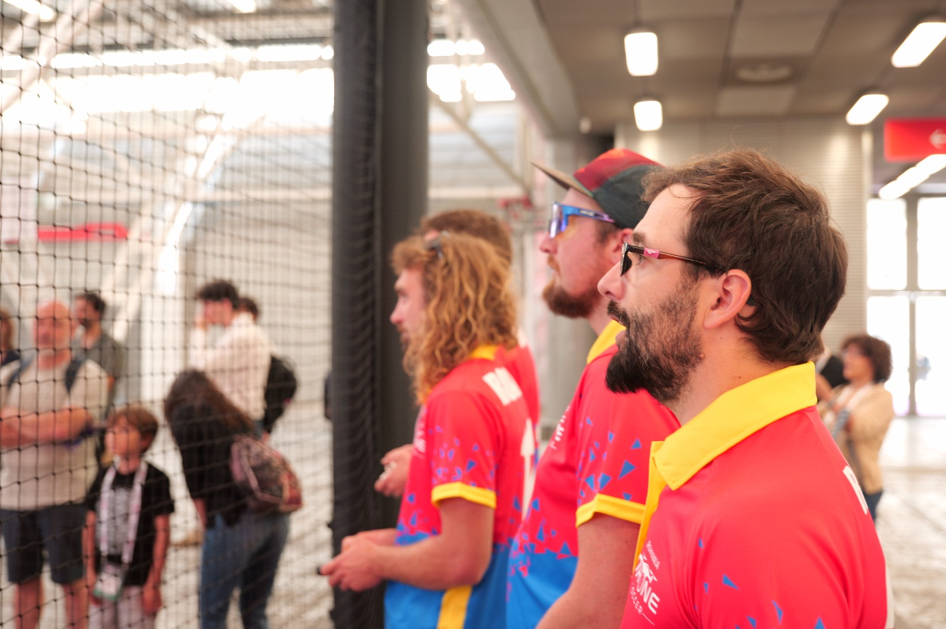
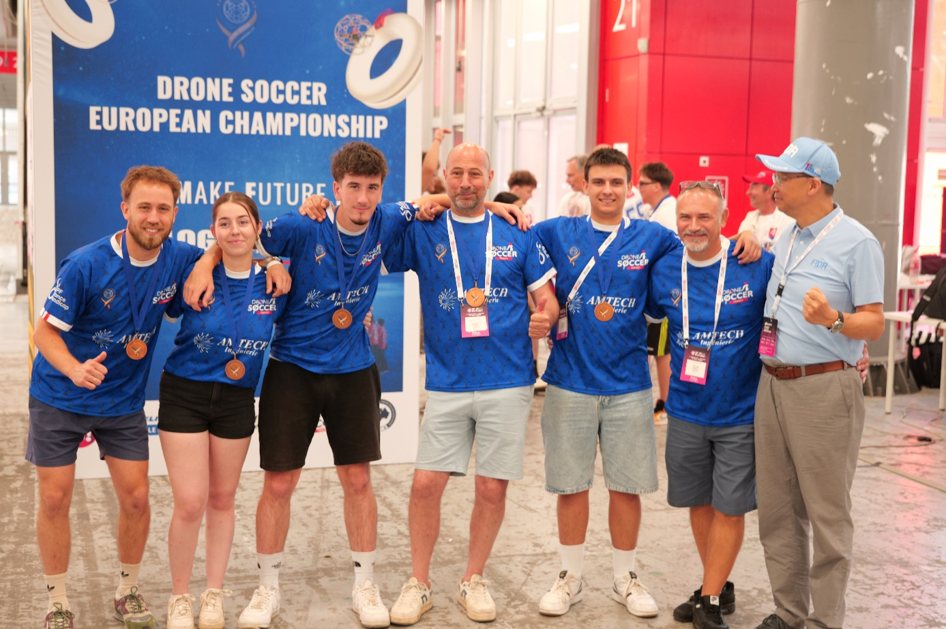
In the bronze medal match, Romania faces France—the very nation that, as we recall, helped Romania Drone Soccer get started on this adventure in recent months. But will the student now surpass the teacher? In the first set, the team from Brasov put up a fight but ultimately lost 18–14. In the second set, the Romanians were let down by their equipment and battled courageously for three minutes, but lost again 19–10, letting a chance at a medal slip away… That bronze medal, in fact, went to the French, the event’s organizers. For Clément Maurin, the French striker and the event’s driving force, this one and only medal for the French delegation is a great reward for all the hard work put in: “The past few months have been tough to manage, what with the organization and logistics of setting up this competition. It was so difficult that we barely had time to train together. Considering where we’re coming from, we’re incredibly proud to bring home at least one medal from these championships. Hopefully we’ll be able to devote more time to training next year!”
Friday, June 26, 11:40 a.m.—it’s time for the grand finale, a match for the gold. Whether it goes to two or three sets, it doesn’t matter—this match will crown the very first European Drone Soccer champion. Will Hungary or Slovakia reach for the stars? The pilots take their positions around the Arena to the beat of the competition’s theme song, and off we go for this final showdown between the two powerhouses of the championship, Hungary and Slovakia. The match begins, and just like in the Club Challenge final, Hungary takes a while to get going and loses the first set decisively, 20–12. A 5-minute break for repairs. Enough time to adjust their strategy, and off they go for the second set. This time, Hungary puts the pressure on the Slovaks and stays close on the scoreboard. Cheered on by their compatriots from Fulek on the sidelines, Hungary holds its ground for the first two minutes and even manages to take the lead briefly at times. But in the final minute, Mihaly Sos’s players lose a defensive drone, and the Slovaks capitalize. 14–13, 15–13, 16–13, 17–13… The Hungarians cracked and let their final chance at the title slip away, 18–14. The Slovaks are European Champions after dominating the week and both Challenge matches. Disappointment was palpable on the Hungarian side, in stark contrast to the celebrations of the Slovak delegation. A final that offered valuable lessons for European Drone Soccer. On one side, Slovakia—potentially the new team to beat in Europe, alongside Turkey and Spain (who were absent from this tournament). On the other, Hungary—the perennial underdog and the only team capable of challenging Slovakia over the three days of competition, yet unable to seal the deal in the final. It is a team that demonstrated tremendous progress between the first and last days of the event but still lacks the experience needed to clinch the gold.
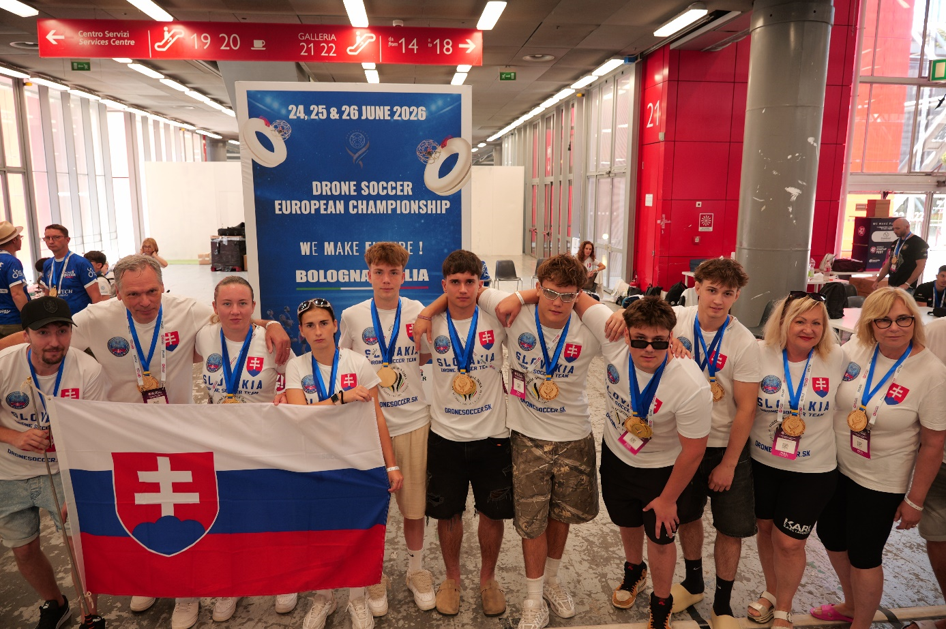
One thing is certain: this event marks a genuine milestone for European Drone Soccer. It was the first exclusively European competition to see the arrival of new continental contenders—such as Romania and Hungary—alongside the confirmation of Slovakia, a nation clearly determined to become a global powerhouse in the sport. For France, the championship marked the end of its tenure as the FIDA’s lead nation in Europe, passing the baton to Turkey, the future host of the 2027 competition. The quest for glory is only just beginning, and it is a safe bet that the Slovak crown will attract more interest than ever… See you in 2027!