European Drone Soccer Championship: Youth Takes the Lead at the International School Challenge
This may be the biggest innovation of this European championship: the International School Challenge, a tournament exclusively for students from middle school through higher education who have come from all over Europe to compete in this “Challenge” format specific to FIDA. Whether it’s middle school, a sports high school, or a military academy, all are welcome to highlight the importance of education in the development of drone soccer—even at the competitive level.
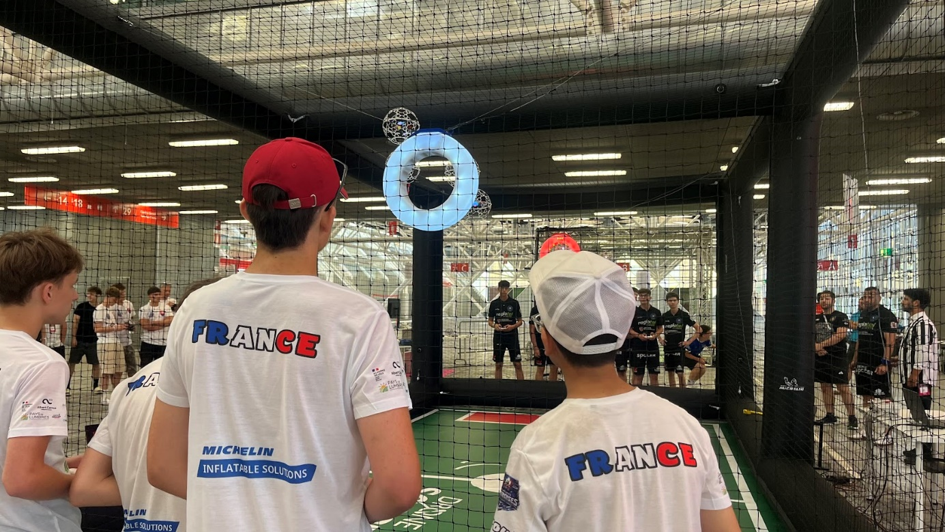
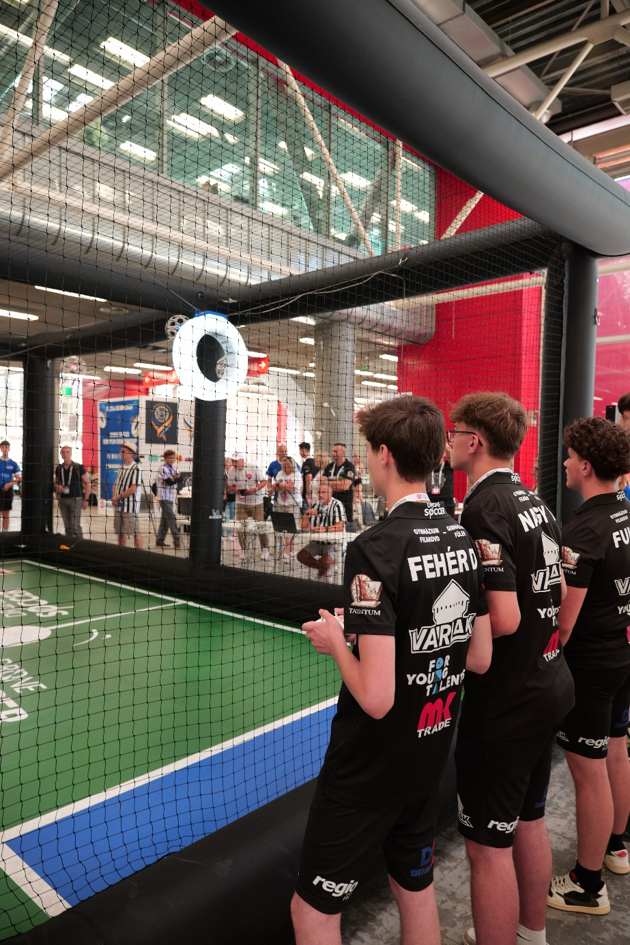
Bringing a breath of fresh air to the event, this School Challenge was tasked with the daunting responsibility of kicking off the competition. From the very first day of competition, the six participating teams faced off in a round-robin stage, which was crucial for determining the final bracket. In the race for the European title: three teams made up of French middle school students, one team from a sports-focused high school, and a military school from Hungary, and finally, a sports vocational school from Kosice, Slovakia.
A Tough Start for the French
At the end of this group stage, in which every team faced each other at least once, two favorites emerged: Hungary’s NKE HZSE Military School with 3 wins and 2 draws, and Slovakia’s Stredná Sportová Skola with 4 wins and 1 draw—both of which advanced to the semifinals. Trailing slightly and beaten on goal difference by their compatriots, the Hungarians from Fulek Gimnazium finished third and must go through the playoffs before advancing to the semifinals. The very young French teams—Skyfive, Shadow Vortex, and Hélices Lumbroises—had a much tougher start to the tournament, which can be attributed to their lack of experience. “It’s a little complicated for them. They’re much younger than their opponents, less trained, I think, and above all, a bit less serious” says one of their coaches, Stéphane Guidez, with a laugh. “But at least they’re living the experience to the fullest; they’re fighting with what they’ve got. Nothing is set in stone—there’s still a great final phase to play, and why not a medal?”
Tough Finals and Promise for the Future
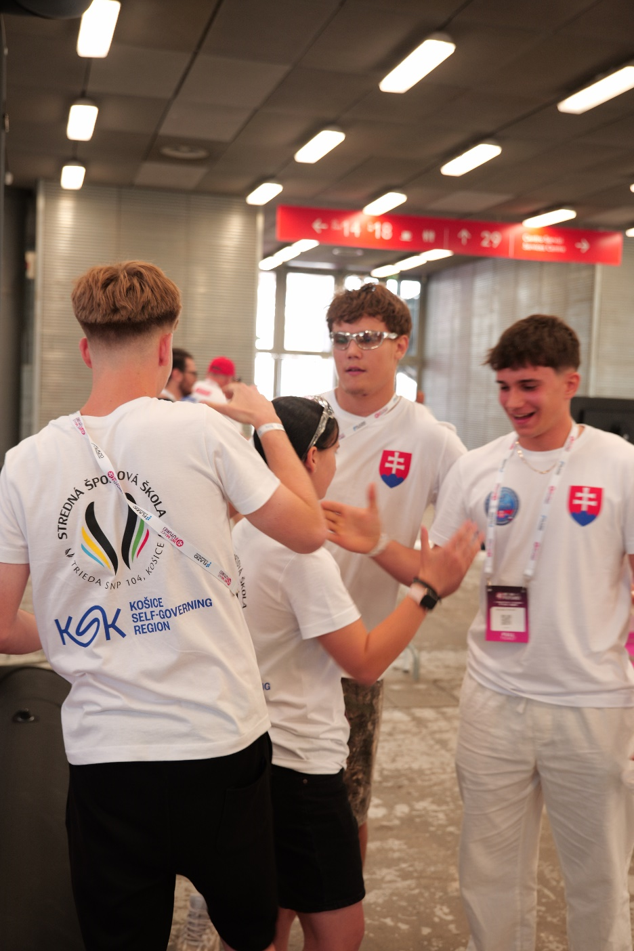
After the two promotion playoffs, Gimnazium Fulek and the Hélices Lumbroises ultimately advanced to the semifinals. But against powerhouses like FIDA Slovakia and NKE HZSE, they were unable to compete in the semifinals for a spot in the grand final. In the bronze medal match, the fighting spirit of the French team, the Hélices Lumbroises, wasn’t enough to secure the medal against Gimnazium Fulek, whom they lost to courageously in two sets, 10-8 and 14-9. Then came the showdown in the final between Hungary and Slovakia, two teams that had played to a draw in the first round. And what a hard-fought first set it was. Leading for much of the set, NKE HZSE ultimately faltered late in the match despite a 5-on-4 numerical advantage, losing 20-19 in a highly offensive contest. The second set began much like the first: three very tight minutes, but this time led by the Slovaks. Despite a strong comeback by the Hungarians in the final seconds, FIDA Slovakia ultimately prevailed 19-17.
It was a satisfying result for Nikolaj Szilagyi, who remained level-headed, aware that beating this Hungarian team was no easy feat: “We were able to be effective on offense, but this is the first time a team has unsettled us so much on defense. We’ll have to work on that before facing them again in the final” (The two teams will also face off in the European Cup and Club Ch finals). “We can already be satisfied with this first title, but our main goal here is the European Cup; everything else is just a bonus.”